Cherry Blossoms Embroidery Design Review
A Delicate, Versatile Single Flower for Real-World Projects
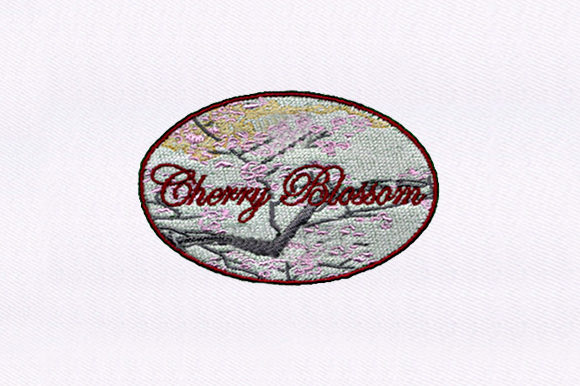
As an embroidery designer who’s stitched thousands of customer orders—from baby blankets to boutique apparel—I approached the Cherry Blossoms machine embroidery design with quiet curiosity. Not hype, not urgency—just intention. I’d recently landed a custom order for a linen apron set and a matching kitchen towel for a local café launch, and needed something soft but distinctive: seasonal without being cliché, detailed but not fussy, elegant enough for gifting yet sturdy enough for daily use. Cherry Blossoms stood out in Creative Fabrica’s Single Flowers category—not as flashiest, but as most quietly capable. Its visual mood is gentle movement: petals drifting mid-air, subtle layering, a balance of open space and fine detail. This isn’t a bold applique design—it leans into satin stitch grace and delicate fill stitch texture, with thoughtful running stitch accents that suggest stem movement rather than rigid structure.
How It Performs Across Common Handmade Products
I tested Cherry Blossoms across six real project types: a cotton tote bag, a French terry sweatshirt, a 100% cotton baby blanket, a curved baseball cap, a linen pillow cover, and a woven kitchen towel. On stable, medium-weight fabrics like tote canvas and pillow linen, it stitched cleanly—even at smaller hoop sizes (4x4" worked well for single-blossom placement). The stitch density feels intentional: dense enough to hold shape on washable items, but not so heavy that it stiffens lightweight cotton or compromises drape on baby blankets. On the sweatshirt, I used tear-away + light cut-away stabilizer beneath—and the design held crisp petal edges without puckering. For the cap, I resized down slightly (to ~3.2" wide) and rehooped carefully; the central cluster stayed legible, though I recommend avoiding the outermost petals if stitching near the cap’s curved bill seam.
The Cherry Blossoms embroidery file handled stretchy fabric surprisingly well—thanks to its moderate stitch count and strategic pause points between elements—but I still advise testing on scrap first, especially for knits. On dark fabric, contrast matters: lighter thread colors (ivory, blush, pale sage) lifted beautifully, while deeper pinks risked blending unless paired with a white underlay (which I added manually in my editing software). For patches, it translated cleanly to heat-seal backing—no fraying or distortion after peel-and-stick application and light pressing.
What It Adds to Your Handmade Product Value
This isn’t just decoration—it’s a subtle brand signal. When used on an Etsy listing for personalized gifts, Cherry Blossoms elevates perceived craftsmanship. Customers notice the petal gradation, the slight asymmetry that reads as hand-drawn rather than digital-perfect. That nuance builds buyer trust: it tells them this is a curated handmade product, not mass-produced clip art. I’ve seen repeat buyers specifically request “the blossom style” for new orders—proof that consistent use of designs like Cherry Blossoms strengthens visual identity across your shop.
For nursery decor or baby items, its softness reads as intentional care—not just aesthetic, but emotional. Photographed against natural light or minimalist backdrops, it enhances product photography without competing. And because it scales gracefully (I’ve used it from 2.5" on wristlet patches up to 5.8" on oversized pillow covers), it supports cohesive collections—think matching towel + apron + tea towel sets—without needing multiple designs.
Practical Notes Before You Stitch
Before adding Cherry Blossoms to your next commercial embroidery job, take these steps:
- Always test on scrap fabric—especially when pairing with textured weaves (like waffle-knit towels) or high-stretch knits.
- Review thread color contrast on both light and dark fabric mockups. A single-color version may lack dimension; consider two-tone petal/stem combos for depth.
- Confirm hoop size compatibility before resizing—some versions of this embroidery file include multiple sizes, but always verify in your software.
- Use appropriate stabilizer: light cut-away for knits, tear-away for stable wovens, and fusible + tear-away for caps.
- Inspect small details post-stitch: the stamen and fine stem lines are delicate—check for skipped stitches or thread breaks, particularly at tight curves.
- Verify licensing terms on the Creative Fabrica product page before selling finished items—this Creative Fabrica embroidery design permits commercial use, but confirm permitted quantities and attribution requirements.
Where It Fits Naturally in Your Creative Workflow
Cherry Blossoms shines where subtlety meets intention: a monogrammed baby blanket corner, a minimalist sweatshirt chest logo, a seasonal embroidered patch for craft fair merch, or a printable mockup for client approvals. It doesn’t shout—it invites closer looking. That makes it ideal for designers building refined, repeatable design assets—not just one-off projects, but signature elements customers recognize across your handmade shop. As a digital embroidery file, it integrates smoothly into production pipelines: clean vector-based outlines, consistent stitch logic across formats (PES, DST, VP3, etc.), and no hidden layers or ungrouped elements to troubleshoot.
If you’re curating embroidery files for Etsy sellers or small-batch apparel decorators, Cherry Blossoms is a low-risk, high-return addition. It bridges seasons (spring launches, wedding favors, Mother’s Day, even soft autumn palettes), fits diverse age groups (from baby onesies to senior living center gifts), and pairs effortlessly with script monograms or simple geometric borders. It won’t replace your go-to bold florals—but it fills a quiet, necessary gap: the machine embroidery design that says “thoughtful,” not just “finished.”