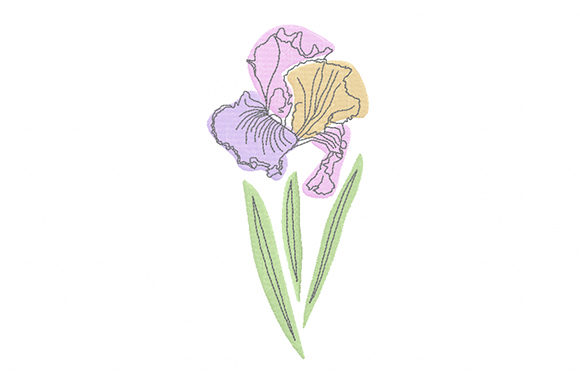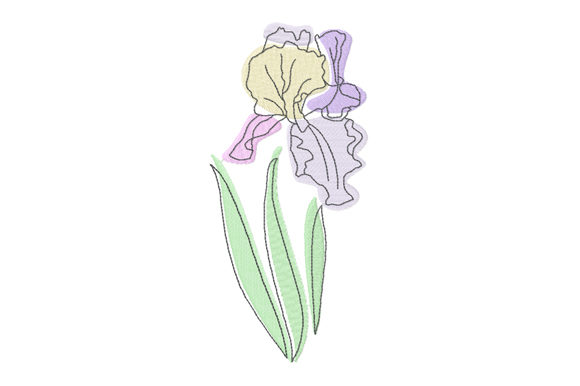
Pastel and Line Art Iris Flower
A Seasonal Designer’s First Impression
As an embroidery designer who’s built dozens of holiday collections for Etsy sellers, craft fairs, and small-batch apparel brands, my first glance at Pastel and Line Art Iris Flower landed with quiet confidence—not flash, not fuss, but calm intention. This isn’t a loud holiday motif like holly or snowflakes. It’s softer: romantic, elegant, and quietly spiritual—like spring arriving just before Easter, or a gentle nod to Mother’s Day, baby showers, or even quiet solstice gifting. The line art foundation gives it modern clarity; the pastel shading adds delicate dimension without heaviness. It feels premium, not mass-produced—and that matters when shoppers scroll past hundreds of listings searching for something meaningful.
Why It Fits Real Holiday & Seasonal Product Needs
Pastel and Line Art Iris Flower thrives where emotional resonance meets practical versatility. On sweatshirt embroidery? It reads beautifully on lightweight cotton blends—especially oversized crewnecks styled as “cozy but curated” family matching sets. As a tote bag design? It shines on natural canvas or linen—ideal for boutique gift bundles paired with lavender sachets or handmade soap. For kitchen towel embroidery or pillow cover applications, its vertical orientation (noted in the product description) makes it ideal for narrow, tall surfaces—no awkward cropping needed.
It also translates well into embroidered patch form for aprons, denim jackets, or baby onesies—offering subtle sophistication where bolder florals might overwhelm. And because it’s a Single Flowers design, it layers effortlessly: pair it with minimalist monograms for personalized gifts, or nestle it beside a tiny stitched date for anniversary or graduation keepsakes. On social media previews and printable mockups, its clean lines render crisply—even at thumbnail size—boosting click-throughs for Etsy sellers competing in crowded seasonal feeds.
Where to Use It Thoughtfully (Not Everywhere)
While versatile, Pastel and Line Art Iris Flower isn’t universally forgiving—and that’s okay. Its delicate shading and fine line work mean it demands attention to detail in execution. Avoid using it on thick terry cloth towels unless you adjust stitch density and stabilizer accordingly. Dark fabric requires careful thread color testing: soft lilac or pale sage may vanish without contrast backing or tone-on-tone layering. Metallic thread? Not recommended—the subtlety of the design gets lost in shine.
Stretchy garments (like ribbed knit baby bodysuits) need proper cutaway stabilizer and reduced tension to prevent distortion. Curved caps or tight hoop sizes (< 4" diameter) risk losing definition in the iris’s slender petals—confirm the original embroidery file’s minimum recommended hoop size before digitizing for production. And while it’s lovely on table linens, remember repeated washing: test wash a sample to ensure pastel thread shades hold up over time.
Emotional & Commercial Impact During Peak Seasons
Holiday shoppers don’t just buy products—they buy feeling. Pastel and Line Art Iris Flower taps into quiet, heartfelt moments: a grandmother’s hand-stitched pillow cover, a new mom’s “welcome spring” nursery set, or a teacher’s thank-you gift wrapped in linen. That emotional authenticity builds trust—especially for small shop owners whose customers value craftsmanship over trend-chasing.
Visually, its consistency across product types (tote → pillow → patch) strengthens brand recognition. A customer who sees it on your Instagram story, then your Etsy banner, then your craft fair display feels continuity—not randomness. That cohesion lifts perceived value, supports higher price points, and encourages repeat purchases. Plus, because it’s neither overtly Christmas nor Halloween-themed, it extends shelf life: use it from March through June, then again in late November for “soft holiday” gifting—avoiding the fatigue of overused motifs.
Practical Designer Notes Before You Stitch
- Test thread colors on both light and dark fabric swatches—pastels behave differently under natural vs. indoor light.
- Check stitch density in the petal edges and center detail; high density can cause puckering on lightweight fabrics.
- Confirm hoop size compatibility—especially if scaling for larger items like duvet covers or wall hangings.
- Use appropriate stabilizer: tear-away for stable wovens, cutaway for knits or stretchy baby items.
- Create realistic mockups—not just white backgrounds. Show it on oatmeal linen, heather grey sweatshirts, and unbleached canvas to reflect real customer expectations.
- Review small details after stitching: the iris’s stamen lines and subtle shading should remain legible—not blurred or fused.
- Plan matching color palettes across your collection: think dusty rose thread + oatmeal fabric + sage ribbon accents.
- Verify commercial licensing before selling finished seasonal products—this is essential for Etsy sellers and small business owners using digital embroidery files.
Final Thought: A Quiet Anchor for Meaningful Making
In a market flooded with fast trends and algorithm-driven designs, Pastel and Line Art Iris Flower stands out by doing less—and doing it with intention. It’s not shouting for attention. It’s inviting connection. For embroidery sellers building thoughtful holiday lines, handmade gift makers curating heirloom-quality pieces, or apparel decorators seeking elegance without excess—it’s a reliable, emotionally intelligent choice. Paired with smart execution and authentic storytelling, this Embroidery design doesn’t just decorate fabric—it deepens the meaning behind every stitch, every gift, every season.