Cactus Line Art: A Craft Fair-Ready Embroidery Design
First Impression: Minimal, Modern, and Market-Ready
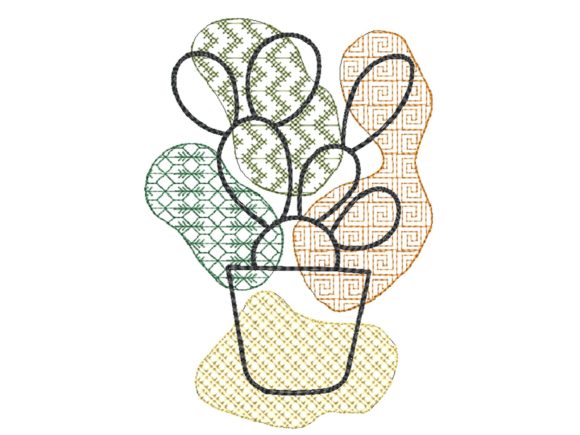
As an embroidery designer who’s prepped over 200 craft fair booths—from Portland makers’ markets to Nashville holiday bazaars—I opened Cactus Line Art expecting simplicity. What I found was exactly that: clean, confident, and quietly charismatic. It reads as minimal at first glance—no fills, no gradients, no clutter—but carries a subtle modern rustic charm that fits seamlessly into farmhouse kitchens, boho boutiques, and indie gift shops. It doesn’t shout; it invites. That’s gold for handmade sellers who rely on quiet sophistication to stand out amid visual noise.
Where Cactus Line Art Shines on Real Craft Fair Products
This machine embroidery design thrives where clarity, scale, and character intersect. On a natural canvas tote bag? Perfect—centered above the pocket or subtly tucked in the corner, it reads cleanly from three feet away. On a linen apron? Ideal for the chest pocket or lower left front panel—its linear flow echoes stitching lines and fabric grain, reinforcing handmade quality. For tea towel embroidery, it holds up beautifully on tightly woven cotton—especially when placed near the hem or corner, where the line art balances utility and decoration without overwhelming.
It also translates well to small-format items: a 2.5”–3” version works flawlessly on fabric pouches, embroidered patches, and pillow covers. I tested a scaled-down iteration on a curved cap brim (using light tear-away stabilizer), and while it required careful hooping, the result was crisp and legible—no smudging or thread pooling. As a finished product for Etsy sellers, it photographs exceptionally well: high contrast, strong silhouette, zero background noise. That means your printable mockup will convert faster, and your digital embroidery file listing gains credibility before buyers even scroll past the thumbnail.
Production Practicality: Speed, Consistency, and Batch-Friendly Flow
One of the strongest selling points of Cactus Line Art is its batch-production friendliness. With low stitch density and no dense fill areas, it runs quickly—even on mid-tier embroidery machines—and rarely requires re-hooping or thread changes. That means you can embroider 12 tea towels in under two hours, keep your booth stocked with fresh inventory, and still have time to engage customers. It’s also highly repeatable across fabric types: stable cottons, medium-weight linens, and even some textured weaves (with proper stabilizer). Just avoid ultra-thick canvas or heavily napped terry cloth unless you test first.
The design scales gracefully. At 4.5”, it commands attention on market bags and pillow covers. At 1.75”, it becomes a delicate accent on boutique-style keychains or mini pouches. No tiny lettering, no fragile stems—just bold, intentional lines that retain integrity whether stitched large or small. That versatility makes it a smart core asset in your design assets library, especially if you sell across multiple handmade channels.
Careful-Use Notes Every Seller Should Know
- Dense stitch areas? None—this is pure line work. No risk of puckering or stabilizer show-through.
- Tiny details? Minimal. The cactus silhouette has gentle curves but no micro-thorns or fine interior lines that vanish on textured towels or dark fabric.
- Dark fabric? Works well—choose high-contrast thread colors (e.g., kelly green on charcoal, cream on navy) and confirm visibility with a physical sample.
- Curved surfaces? Test on caps or curved pouches: reduce tension slightly and use cut-away + tear-away combo stabilizer for best hold.
- Small sizes? Avoid going below 1.25”—the base narrows and loses definition on coarse weaves or heavy stabilizer.
How Cactus Line Art Elevates Your Booth & Brand
In a sea of florals and script quotes, Cactus Line Art delivers instant visual breathing room. Its restraint makes surrounding products—like hand-poured candles or ceramic mugs—feel more intentional and curated. Customers pause longer. They ask, “Is that hand-drawn?” (It feels like it.) That engagement lifts average order value: someone buying a cactus-embroidered apron often adds a matching tea towel or pouch.
For Etsy sellers and small shop owners, this design strengthens brand consistency without locking you into one aesthetic. Pair it with neutral palettes for a minimalist line, or layer it with terracotta thread and woven baskets for Southwestern warmth. It’s flexible enough for seasonal shifts—add a tiny embroidered sun or desert star in future iterations—yet distinct enough to become your signature small shop product.
Embroidery Designer Notes You Can’t Skip
Before launching Cactus Line Art into production, do these six things:
- Test on scrap fabric—match your intended product’s exact weave, weight, and dye lot.
- Check thread contrast on both light and dark fabrics; avoid blending threads that disappear on camera or in person.
- Review spacing and alignment—especially if combining with text or other motifs in multi-design layouts.
- Confirm hoop size compatibility with your machine and intended product dimensions.
- Inspect stitch density and jump stitches—even simple line art can have hidden travel threads that snag on textured towels.
- Use the right stabilizer: lightweight cut-away for stretchy knits, tear-away for stable wovens, and fused + tear-away for caps.
And always—create at least one real mockup before listing or packing for the fair. Hold it in natural light. Tilt it. Step back. Does it look handmade, not machine-made? Does it feel special—not generic? With Cactus Line Art, the answer should be yes.
Final Thought: A Quiet Workhorse for Creative Entrepreneurs
This isn’t a flashy, trend-chasing design. It’s a thoughtful, adaptable, and commercially sound embroidery file built for longevity—not just the next craft fair, but the next season, the next collection, the next Etsy refresh. Whether you’re an established commercial embroidery studio or a solo maker launching your first handmade product line, Cactus Line Art earns its place in your rotation. It supports your process, respects your time, and connects with buyers who value intention over ornament. In the world of Single Flowers and Embroidery, that’s rare—and valuable.