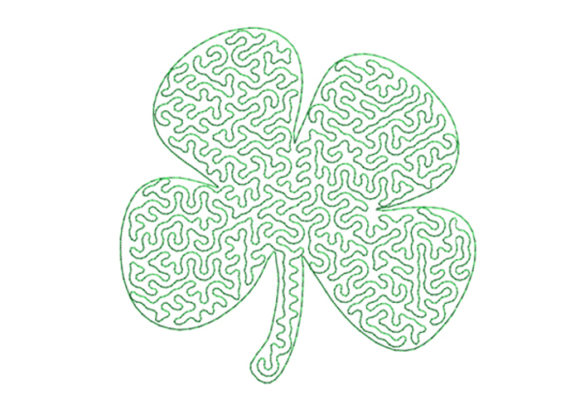
Clover Stippling: A Craft Fair-Ready Embroidery Design
First Impression: Soft, Whimsical, and Quietly Confident
As an embroidery designer who’s prepped over 200 craft fair booths—from snowy Vermont markets to sun-drenched Southern pop-ups—I opened Clover Stippling expecting something dainty. What I got was a breath of fresh air: a single-flower design that feels both grounded and airy. It leans into soft modern farmhouse with a whisper of botanical elegance—neither overly fussy nor too minimal. The “stippling” in the name hints at texture and movement, not rigid lines, which immediately tells me this isn’t just another flat floral. It reads as handmade, intentional, and quietly premium—even before stitching.
Where Clover Stippling Shines on Real Craft Fair Products
This machine embroidery design thrives where subtlety meets impact. On a natural linen tote bag? Perfect—its organic flow complements the fabric’s slub without competing. On a cotton apron? It anchors the chest pocket beautifully, adding charm without overwhelming utility. For tea towel embroidery, it lands right in the sweet spot: large enough to read from three feet away, small enough to leave room for hand-stitched hems or woven labels.
As an embroidered patch, Clover Stippling holds up exceptionally well—its balanced shape and gentle curves translate cleanly when cut and heat-sealed. On curved surfaces like caps or small fabric pouches, it avoids distortion better than many single-flower designs because its stippled center creates visual weight without tight corners or fragile stems. Pillow covers? Yes—especially in neutral-toned linen or oatmeal canvas, where the stitch density adds tactile richness without stiffness.
What Makes It a Strong Seller at Market Stalls & Online
Craft fair shoppers scan fast. Clover Stippling stops them—not with loud color, but with quiet confidence. Its five sizes mean you can use the same embroidery file across product tiers: tiny (1.2”) on a keychain pouch, medium (3.5”) on a tea towel, large (5.8”) on a market bag. That consistency builds brand recognition across your booth. Customers notice the cohesion: same motif, different scale, same handmade quality.
For Etsy sellers and digital sellers, Clover Stippling photographs brilliantly. Its stippled texture catches light gently, translating well in natural-light flat lays and lifestyle shots. Unlike dense fill-heavy designs, it doesn’t flatten under camera flash—and the included color chart makes batch-editing thread palettes for mockups a breeze. As a printable mockup asset, it layers elegantly over muted backgrounds, helping small shop products feel curated, not cluttered.
Practical Production Notes You’ll Thank Yourself For
- Test before you hoop: Run a sample on scrap fabric matching your final product—especially for textured towels or thick twill aprons. Stitch density matters here; what looks delicate on screen may need lightweight tear-away stabilizer on terry cloth.
- Check contrast early: The design relies on tonal variation, not stark outlines. On dark fabric, verify thread colors pop—especially in the stippled center. Don’t assume the default palette works universally.
- Respect the curve: On caps or pouches, confirm your hoop size accommodates the largest version comfortably. Some versions may require re-hooping mid-stitch—factor that into your per-item time estimate.
- Small sizes demand attention: At under 2”, fine details soften. Use it as an accent—not a focal point—on tiny items like sachets or zipper pulls. Avoid placing it near seams or high-friction zones where stitches could snag.
- Licensing is non-negotiable: Since Clover Stippling is marketed for commercial embroidery, double-check license terms before selling finished products. Not all “multiple file format” designs include unlimited small-batch rights.
Design Assets That Build Your Booth’s Visual Strength
In person, Clover Stippling strengthens your display by offering rhythm and rest. While bold lettering or geometric motifs dominate attention, this single-flower design gives the eye a place to land softly—balancing visual noise. I’ve used it as a unifying thread across booth samples: same motif on a folded tea towel, stitched onto a mini pillow, and heat-applied to a kraft gift tag. That repetition signals craftsmanship, not repetition.
It also supports brand consistency without limiting creativity. Pair it with earthy thread palettes for a rustic boutique line—or crisp ecru-on-navy for a modern handmade shop. Because it’s part of the Single Flowers category, it fits seamlessly into seasonal collections (think clover + lavender for spring, clover + wheat for harvest), making it a flexible core design asset—not just a one-off embroidery file.
Final Verdict: A Reliable, Repeatable Craft Fair Workhorse
Clover Stippling isn’t flashy—but that’s exactly why it sells. It feels intentional, calm, and deeply handmade. It performs reliably across fabric types, scales gracefully, and photographs with authenticity. For embroidery business owners juggling Etsy listings, craft fair prep, and wholesale samples, it’s the kind of machine embroidery design that earns repeat orders—not because it shouts, but because it belongs.
If you’re curating a lineup of small shop products for your next market weekend, treat Clover Stippling as your quiet anchor: the design that reassures customers they’re buying something thoughtful, well-made, and quietly special. Just remember—always test, always stabilize, and always let the fabric guide your thread choices. That’s how a simple clover becomes a signature.