Tulip Scribble Stitch: A Craft Fair-Ready Single Flower
First Impression: Fresh, Friendly, and Unmistakably Handmade
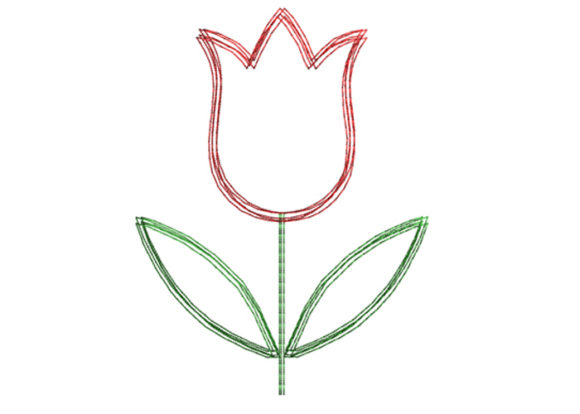
As an embroidery designer who’s prepped over 200 craft fair booths—from Portland pop-ups to Nashville holiday markets—I opened Tulip Scribble Stitch expecting charm. What I got was something sharper: a confident, slightly playful single-flower design that lands perfectly between modern minimalism and warm handmade appeal. “Scribble” in the name isn’t literal chaos—it’s controlled looseness. Think hand-drawn energy translated into clean, fluid satin and fill stitches. It reads as fresh, not fussy; botanical, not stiff. For customers scanning your booth in under three seconds, Tulip Scribble Stitch says “thoughtful,” “crafted,” and “mine”—not mass-produced.
Where It Shines on Craft Fair Products
This machine embroidery design thrives where personality meets utility. On a natural canvas tote bag? Instant standout—centered above the pocket or scaled small near the strap, it adds quiet sophistication without shouting. As apron embroidery? Brilliant. Positioned just above the waistband or subtly on the chest pocket, it softens utilitarian fabric with organic movement. For tea towel embroidery, it’s ideal at medium size (3.5"–4.5"): clear enough to read from across a market aisle, detailed enough to invite closer inspection of stitch quality.
On embroidered patches, Tulip Scribble Stitch punches up jackets, denim bags, and kids’ backpacks—its open negative space prevents bulk, and its balanced proportions hold shape after washing. As a cap embroidery motif? Use the 2.75" or 3" size only—and test hoop clearance first. Avoid the crown curve; place it cleanly on the front panel for crisp legibility. Small fabric pouches and pillow covers benefit most from the 3.25" version: large enough to anchor the surface, small enough to preserve drape and seam integrity.
What Makes It Sell—And What Requires Care
Tulip Scribble Stitch succeeds because it’s instantly legible, emotionally resonant, and versatile across product categories. Its five sizes mean you’re never stretching or shrinking to fit—you’re choosing intentionally. That flexibility directly supports batch production: one file set powers your entire booth lineup, from $12 patches to $48 linen pillow covers. And yes—it photographs beautifully for Etsy listings and printable mockups. The color chart included helps you match thread colors to fabric palettes (ivory on oatmeal linen, navy on charcoal cotton twill), boosting perceived value before the buyer even touches the item.
But here’s where attention matters: the “scribble” detail lives in fine stem lines and petal edges. At the smallest size (under 2"), those strokes can blur on textured towels or dense quilting cotton. On dark fabric, low-contrast thread choices will mute the design’s liveliness—always test thread colors on scrap fabric first. Also, check stitch density before hooping thick canvas or coated market bags: too much fill in tight curves risks puckering. If your stabilizer isn’t firm enough—or if you skip tear-away backing on lightweight linens—the delicate flow of the tulip’s outline may distort.
Smart Production Notes Every Designer Should Run
- Always stitch a real mockup—not just a digital preview—before committing to 20 tote bags. Fabric texture changes everything.
- Confirm hoop size compatibility across your machines. Some versions may require a 5x7" hoop minimum—critical if you’re sharing equipment at a shared studio or maker space.
- Review spacing between elements. Even though it’s a single flower, overlapping petals and stems need breathing room on curved surfaces like caps or rounded pouches.
- Use cutaway stabilizer for knits, tear-away for wovens, and fusible + tear-away for tea towels. The right stabilizer isn’t optional—it’s what keeps your handmade product looking premium, not puckered.
- Verify commercial licensing terms before selling finished products. Since this is a digital embroidery file intended for resale use, confirm whether your license permits unlimited physical units or requires per-item reporting.
Booth Impact & Buyer Psychology
In a sea of florals, Tulip Scribble Stitch stands out by avoiding cliché. No perfect symmetry. No stiff realism. Just a tulip that feels plucked mid-sway—alive, approachable, quietly confident. That nuance builds instant rapport: customers don’t just see a flower; they feel a story. At craft fairs, that translates to longer booth dwell time, more questions (“Did you draw this?” “What thread did you use?”), and higher attachment to the finished product.
It also strengthens brand consistency. Whether you’re an Etsy seller known for earthy kitchen goods or a boutique maker specializing in minimalist apparel, Tulip Scribble Stitch adapts without diluting your voice. Pair it with neutral fabrics and tonal threads for serene cohesion—or go bold with contrasting thread (mustard stem on navy, blush petal on charcoal) for curated surprise. Either way, it elevates the handmade product from “nice” to “intentional.”
Final Verdict: A High-Return, Low-Risk Embroidery File
For embroidery business owners, Cricut and embroidery crafters, and small shop product creators, Tulip Scribble Stitch is more than a pretty floral—it’s a strategic asset. It works hard across categories, scales thoughtfully, photographs well, and communicates craftsmanship at a glance. It fits seamlessly into the Single Flowers category while standing apart through motion and mood. As a machine embroidery design, it balances decorative appeal with practical execution—if you respect its details.
Bottom line: If you’re building a cohesive, sellable line of embroidered goods for your next craft fair, farmers’ market, or Etsy launch, Tulip Scribble Stitch earns its spot—not as filler, but as a signature piece. Just remember: test, stabilize, contrast, and confirm. Then let that scribbled tulip do the talking.