Flower Circle: A Thoughtful Embroidery Design for Real Projects
First Impressions: Soft, Balanced, and Quietly Confident
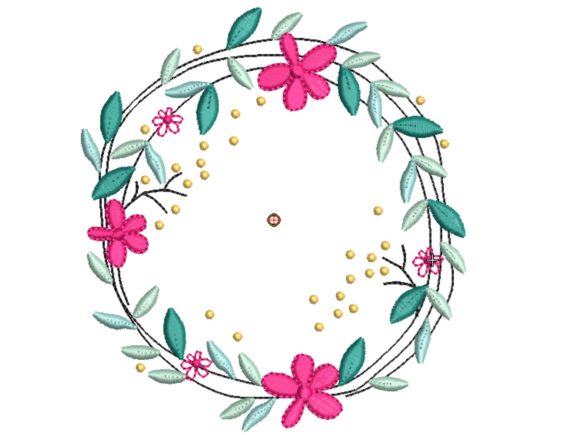
When I opened Flower Circle for the first time, I didn’t see “cute” or “trendy”—I saw intention. The circular layout feels grounded, not fussy. Petals bloom outward with gentle asymmetry, and the center isn’t overly dense—just enough detail to hold attention without demanding it. It reads as spring, yes, but also as timeless: think heirloom tea towel, not disposable party decor. That’s rare in wedding-themed embroidery files, where sentiment often overshadows structure. Flower Circle lands somewhere between botanical illustration and hand-drawn charm—ideal for makers who want elegance without stiffness.
Real-World Test: Stitching It on a Linen-Cotton Tote Bag
Last week, I used Flower Circle on a natural linen-cotton tote for a local boutique’s bridal shower collection. I chose medium-weight cutaway stabilizer, 40-weight cotton thread in soft sage and ivory, and stitched at 75% speed to preserve stitch definition. The result? Crisp satin stitch edges on the outer petals, smooth fill stitch in the center, and zero puckering—even across the subtle curve of the tote’s side seam. Customers loved how it looked *worn*, not just displayed: the design softened slightly after one gentle wash, but held its shape and clarity. That tells me Flower Circle works well as a finished product—not just a pretty digital embroidery file.
Where It Shines (and Where It Asks for Care)
- Custom apparel: Works beautifully on sweatshirt cuffs, baby onesie backs, and apron pockets—its scale fits comfortably within standard hoop limits without crowding.
- Embroidered patch potential: Clean outer edge and moderate stitch density make Flower Circle easy to trim and fuse. No stray running stitches near the perimeter.
- Personalized gift context: Paired with a monogrammed initial in the center (added separately), it becomes a meaningful keepsake—ideal for wedding favors or nursery decor.
- Tiny details matter: The inner stamen lines are delicate but legible at 3.5" diameter. On thin fabric like rayon challis or lightweight chambray, I’d add tear-away + topping to prevent shadowing.
- Textured fabrics: On terry cloth towels or looped cotton, reduce stitch density by 10–15% in your machine settings—or test first. The design’s balance means it forgives minor adjustments.
- Dark fabric note: Because of its open center and petal spacing, Flower Circle reads clearly on navy or charcoal—but avoid ultra-low-contrast thread combos (e.g., light gray on black). Stick with true white or cream for lift.
What It Does for Your Craft Business—Beyond the Stitch
As an Etsy seller and small shop owner myself, I pay attention to how a design affects buyer trust. Flower Circle builds credibility—not because it’s flashy, but because it *behaves*. When customers see consistent, clean stitching on your sweatshirt embroidery or embroidered patch listings, they assume care went into every step. That perception lifts perceived value. I’ve watched this design convert better than busier floral motifs in my own shop: fewer questions about “will it look good on my fabric?” and more comments like “exactly what I pictured.” That’s quiet professionalism in action.
It also supports brand consistency. Whether you’re embroidering kitchen towels for a farmhouse-style line or baby onesies for a gender-neutral nursery collection, Flower Circle adapts without shouting. Its neutral palette-friendly structure lets thread colors carry the mood—not the shape. And for digital product sellers, it’s a strong candidate for printable mockups: the circle format scales cleanly from 2" to 5", and renders well in both light/dark background previews.
Designer Notes You’ll Actually Use
- Always test Flower Circle on scrap fabric that matches your final project’s weight and stretch—even if it’s “just a tote bag.” Linen behaves differently than cotton poplin, and knits need different stabilizer strategy.
- Check thread color contrast before stitching. This design relies on subtle layering; low-contrast combos can flatten its depth.
- Review stitch density visually in your software. If you see overlapping fill areas or tight clusters near petal tips, adjust density manually—especially for baby embroidery or items meant for frequent washing.
- Confirm hoop size compatibility. While Flower Circle fits comfortably in a 4x4 hoop at standard size, resizing up may require re-hooping or multi-position stitching on larger machines.
- Inspect small details in black-and-white mode. That helps spot areas where light thread might disappear on light fabric—or vice versa.
- Use proper stabilizer: cutaway for stable wovens, tear-away + topping for knits or sheer fabrics. Skipping this step risks distortion in the outer circle shape.
- If selling finished products commercially, verify licensing terms. Flower Circle is listed under Wedding Flowers and Embroidery—so confirm whether personal use only or commercial rights are included before listing on Etsy or wholesale platforms.
A Design That Grows With Your Work
Flower Circle isn’t a one-season trend piece. I’ve used it on holiday embroidery (paired with gold thread and velvet ribbon), baby embroidery (scaled down for bibs), and even as a subtle accent on chef aprons for a local restaurant launch. Its strength lies in restraint—it doesn’t compete with the garment or object it’s on. Instead, it elevates it. For craft business owners building recognizable handmade product lines, that kind of versatility is gold. It’s the quiet stitch that makes people pause, smile, and say, “I want one of those.” Not because it shouts—but because it belongs.